Professional Services · New York City
NotaryDeliver: from a bare domain to a booking site and a working ad funnel
How we built a WordPress booking site for a New York City mobile notary, then fixed the lead flow so Google Ads produced calls and form leads at $16 to $23 each.
- Cost per lead from Google Ads
- $16–$23
- Calls and form leads, Oct 21 to Nov 23, 2026
- Old paid booking form
- 1 in 37
- Starts that turned into a submission, before the rebuild
- Ad landing pages built
- 12
- By service, borough and language
- Google rating
- 5.0
- Across 27 reviews
Data through November 2026. Figures come from the client's Google Ads, Google Analytics and Google Business Profile accounts.
The client
NotaryDeliver is a mobile notary in New York City. The owner travels to homes, offices, hospitals and care facilities across the five boroughs and Westchester. He also handles remote online notarization, loan signings, apostilles and powers of attorney.
When he filled out our discovery form in October 2025, he owned the domain name and very little else. There was no website, no logo or brand system, and no way for a customer to book or pay online. He wanted to be live within two to three weeks, and he said the fastest possible setup mattered more to him than anything else on the list.
The first build
We planned a three-week build on WordPress with Elementor Pro and started in early November 2025. It had a page for each service (mobile notary, remote online notarization, loan signings, apostille and specialized notarial acts) and a booking form behind every one of them.
The booking form did most of the work. A customer picks the service and the borough, and the price updates to match, because travel costs are different in each part of the city. Same-day, after-hours and weekend requests add their own fees. At checkout the customer can pay the full amount or a 50% deposit through Stripe. Early on, the card field stopped accepting input when the form had more than one payment field. We fixed it by collapsing all the pricing logic into a single Stripe field at the end of the form.
We also trained the owner to run the site himself, and he got a written breakdown of what it costs to maintain. That training has continued for the whole engagement.
Before

After

The redesign
In 2026 we rebuilt the homepage and header on Elementor's newer component system. The new design uses a shared set of colors, type styles and reusable components, so new pages match the rest of the site without anyone restyling them by hand. The redesigned homepage went live in October 2026.
The problem with the leads
NotaryDeliver's Search campaign went live in late September 2026, and the owner soon told us he'd had more customers from it than Google Ads was reporting. He was right. The site had no Google Ads tag, so phone calls from the website weren't being recorded at all. We added call tracking to every phone link on the site.
The bigger problem was where the ads sent people. Most clicks landed on one long service page with no form on it. Anyone who wanted to book had to find the full booking flow, which ran several steps, asked for 15 to 20 required fields and took payment before submitting. Of 37 paid visitors who started that form, 1 finished it.
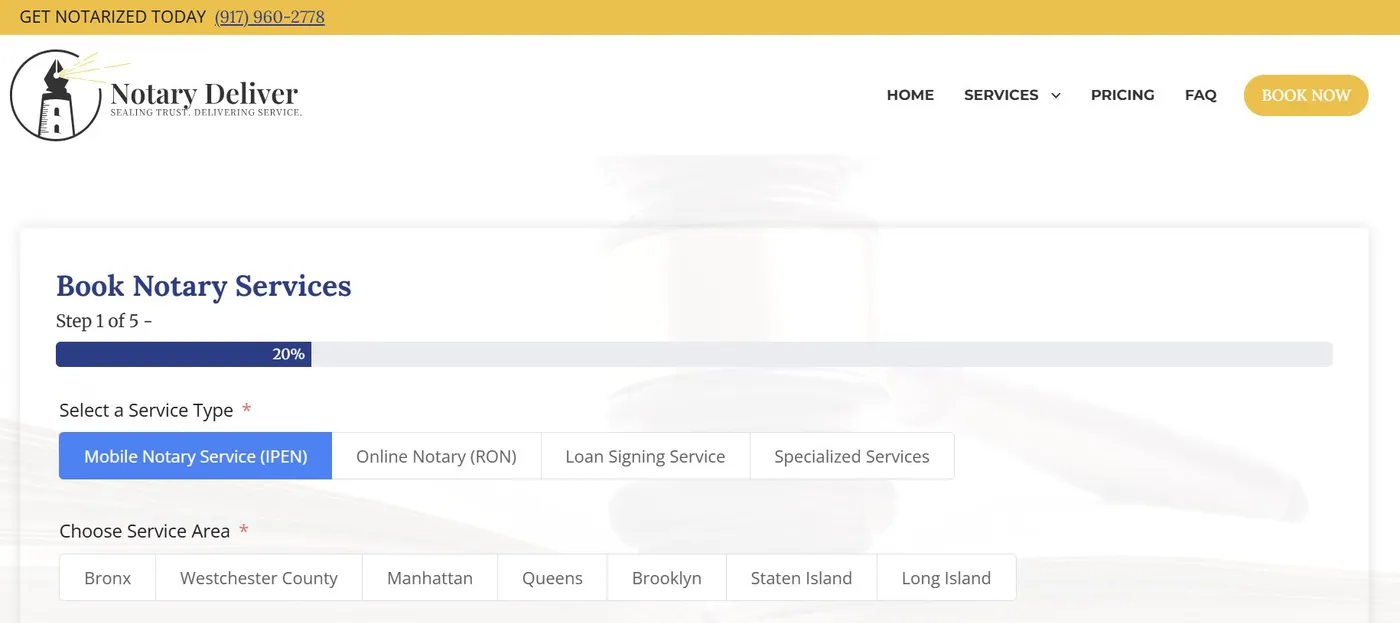
We kept the full booking form for people who are ready to pay, and in October built 10 landing pages for ad traffic, split by service, by borough and by language. Each one uses a four-field request form: name, phone, ZIP code and when they need the notary. There's no payment step, and the owner calls back to confirm the time and price. Hidden fields record which ad and keyword brought each lead, and each submission counts once in Google Ads and Analytics.
English
Español
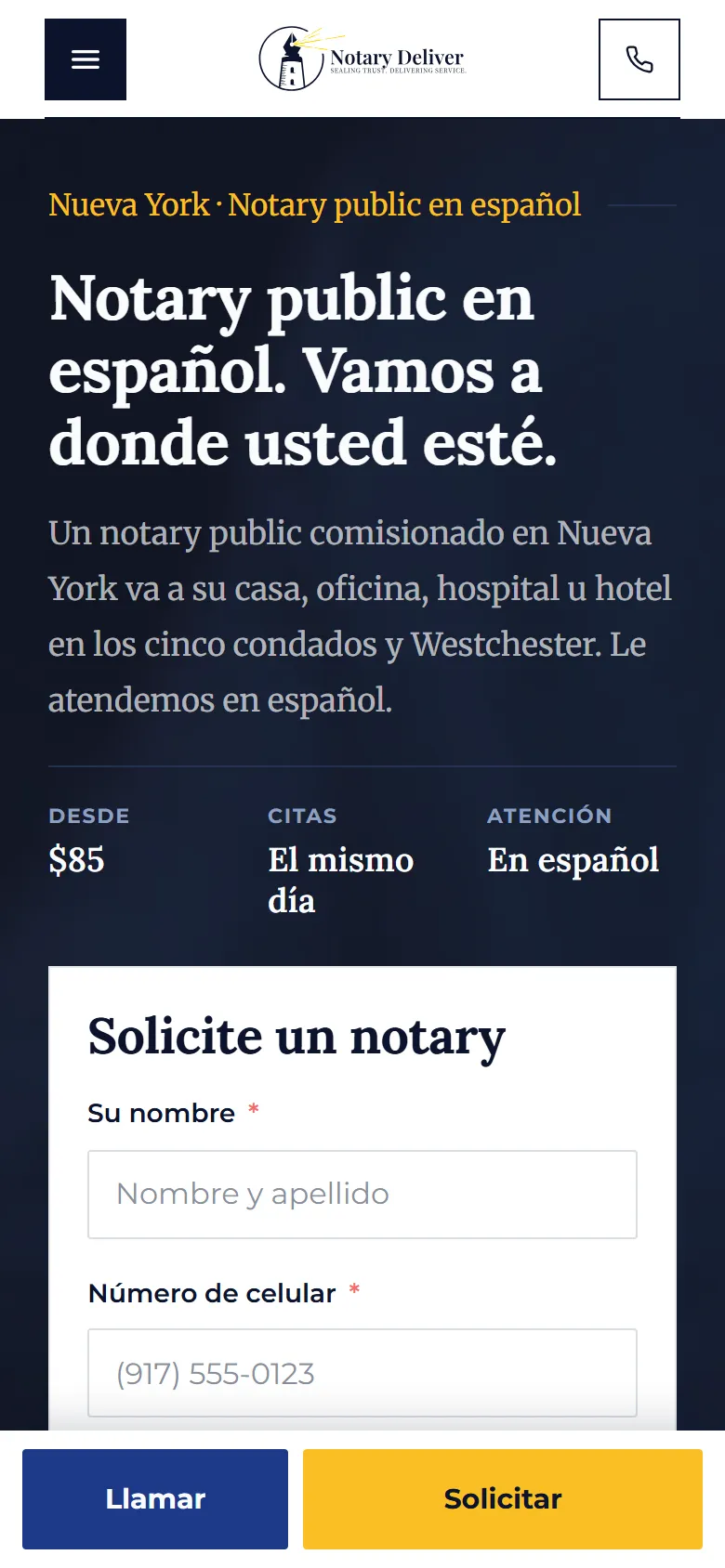
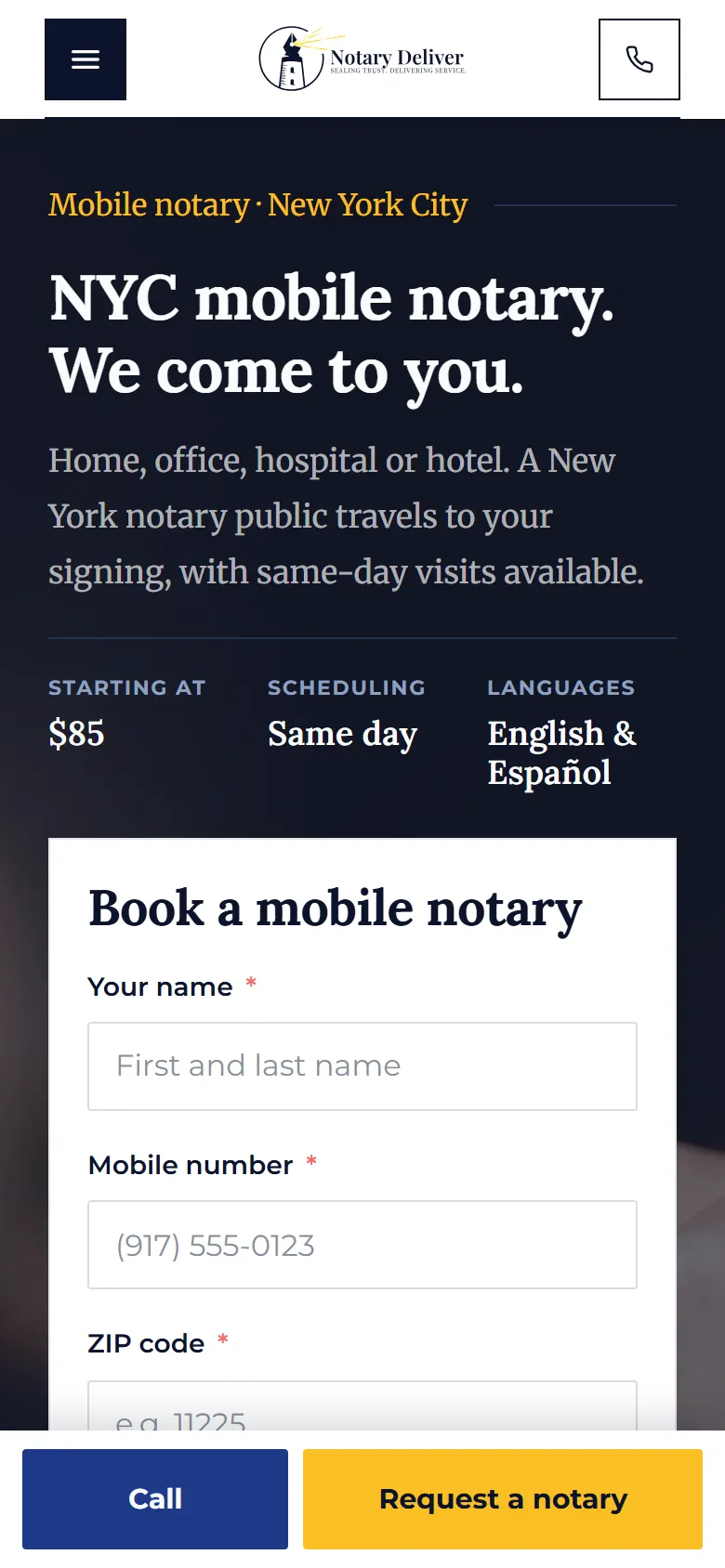
One of those pages is in Spanish, for Spanish-language ads. The owner speaks Spanish, and New York has strict rules about how notaries advertise to Spanish speakers. The page never uses the word "notario," and it carries the required notice that a notary is not an attorney.
Fixing the bidding
For the first four weeks the campaign used Maximize Clicks bidding. It bought plenty of traffic and produced no tracked calls from the ads. Once the tracking was reliable, we switched to Maximize Conversions on October 20. The first calls from ads came two days later.
The result
From October 21 to November 23, 2026, each real lead from Google Ads cost between $16.27 and $23.03, depending on the campaign and the week. We count a real lead as either a call from an ad or a request form submission. Paid visitors also stay longer on the new landing pages. The old service page kept paid visitors for about 17 seconds. The Queens page now averages more than three minutes.
In November we added an apostille and power of attorney campaign with two more landing pages, bringing the total to 12. Its first apostille and power of attorney calls came within two weeks.
Alongside the ads, we optimized the Google Business Profile and wrote replies to customer reviews. NotaryDeliver now has a 5.0 rating across 27 Google reviews, and every recent review has a reply.
What's next
The next step is to tie leads to booked jobs, so the case study can show what the leads turned into as well as what they cost. On the site itself, we still have to add structured business data, tag the Spanish page correctly for search engines, and run a full speed audit.
Google review
“Thanks to Premier Dev Solutions, I have a website that I feel confident about and exceeded my expectations. They are extremely thorough with their process and know exactly what a small business like mine needed. They did a phenomenal job with the website layout, design, forms, SEO optimization, and even organized a document breaking down the amount it will cost to maintain my website, and instructions on how I can maintain it myself once it was in my hands. Premier Dev Solutions knows exactly how to listen to your ideas and translate it into your site. Definitely would choose them again for all my website needs!”